


Transitions® vs. Photochromic Lenses: What's the Real Difference?

Living in Saint Lucia means one thing is guaranteed, sunshine. Lots of it. And while we love our beautiful Caribbean weather, it does create a bit of a dilemma when it comes to eyewear.
Do you carry around prescription sunglasses everywhere? Constantly swap between your regular glasses and shades? Or invest in lenses that adapt to the light automatically?
If you've looked into light-adaptive lenses, you've probably heard two terms thrown around: photochromic and Transitions®. Many people use them interchangeably, but they're not exactly the same thing.
Let's break it down so you can make the smartest choice for your eyes and your lifestyle.
What are photochromic lenses?
What is it?
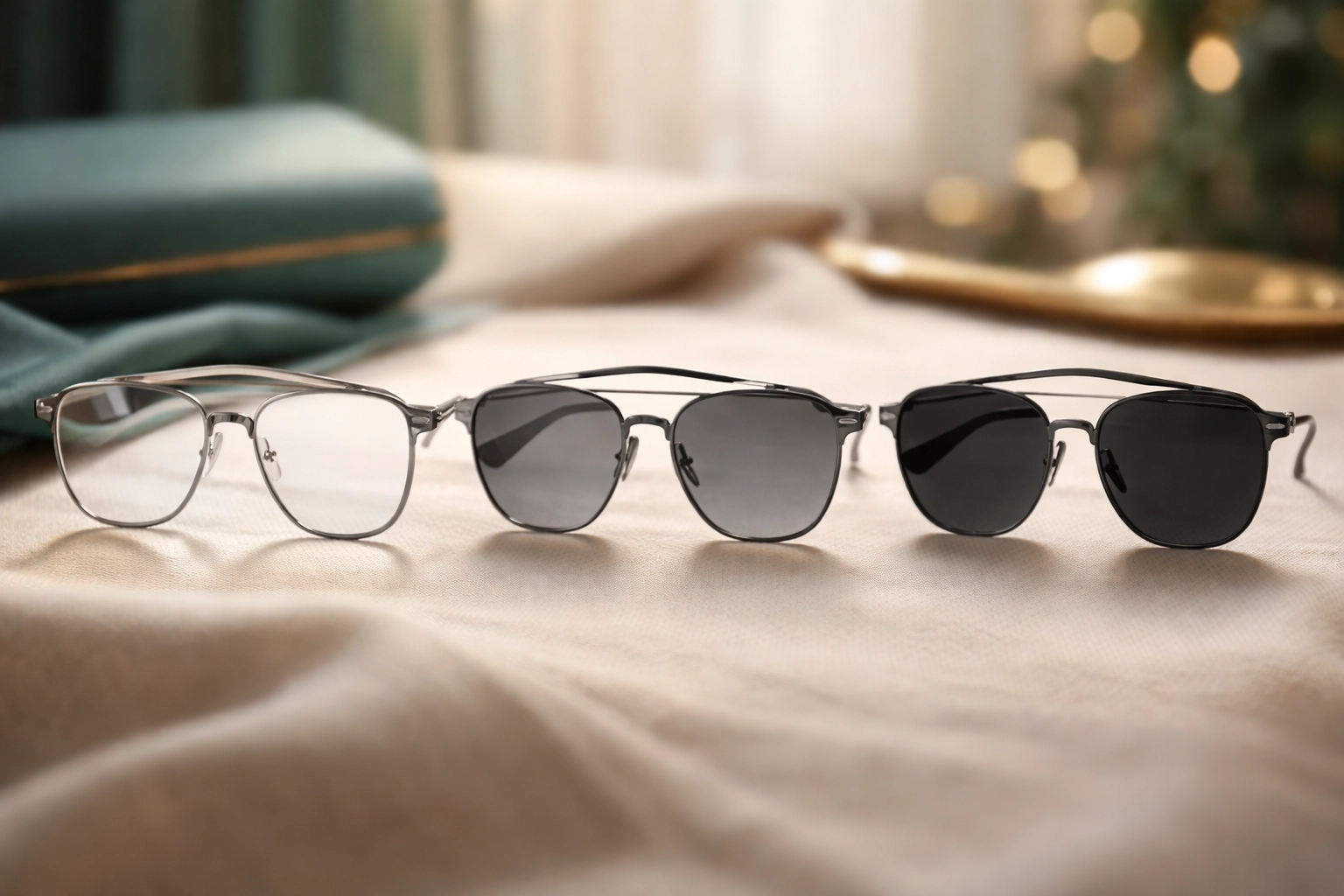
Photochromic is the broad, generic term for any lens that automatically darkens when exposed to ultraviolet (UV) light. Think of it like "tissue" versus "Kleenex", photochromic describes the category, not a specific brand.
How do they work?
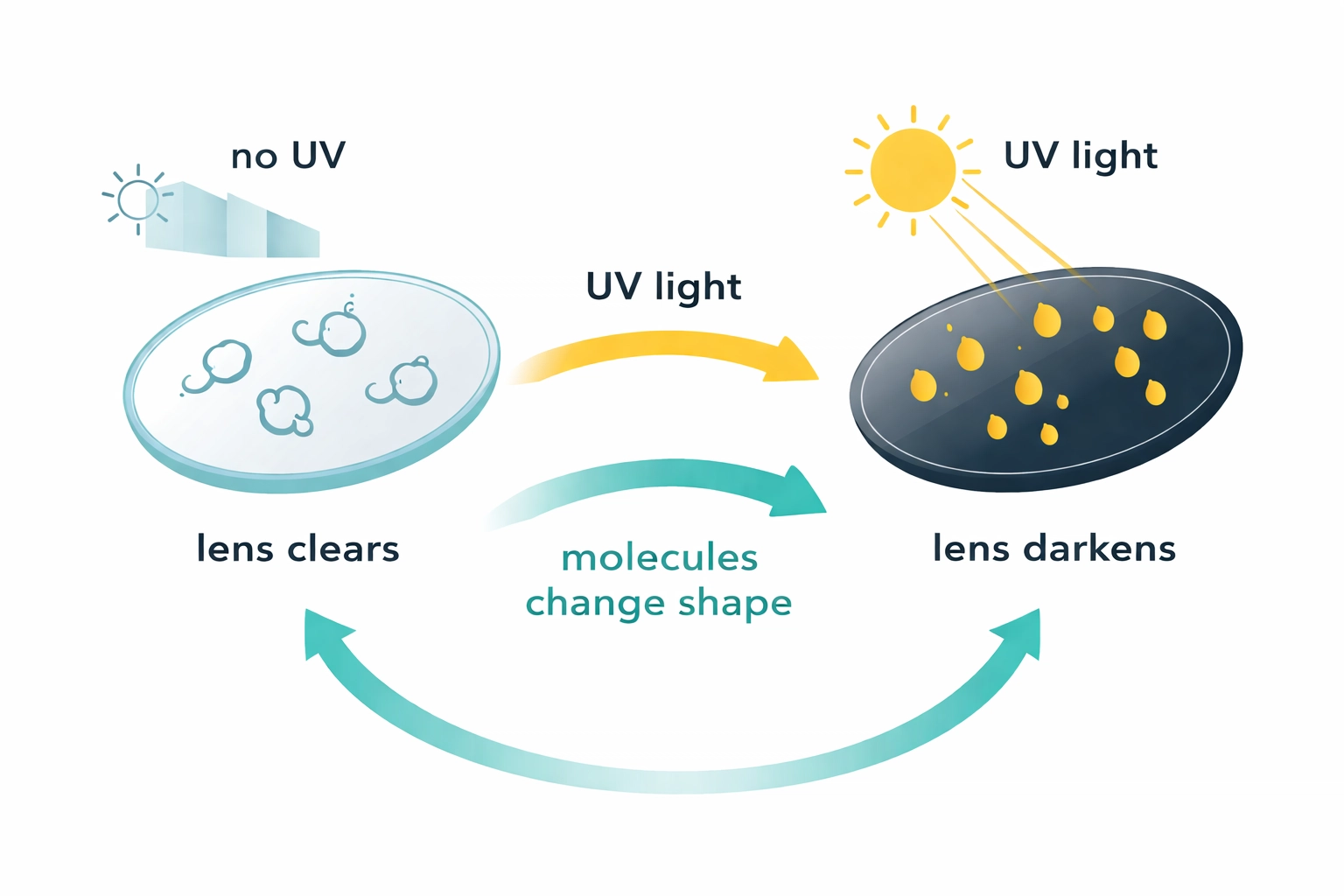
When UV rays hit the lens, special molecules in or on the lens react and change structure. This causes the lens to darken. When you step indoors or away from UV light, the molecules return to their original state, and the lens clears up again.
Why it matters:
You get the convenience of glasses and sunglasses in one pair. No more fumbling around in your bag or forgetting your shades at home. For those of us navigating the bright streets of Castries or enjoying a stroll along Reduit Beach, that's a real game-changer.
What is Transitions®?
What is it?
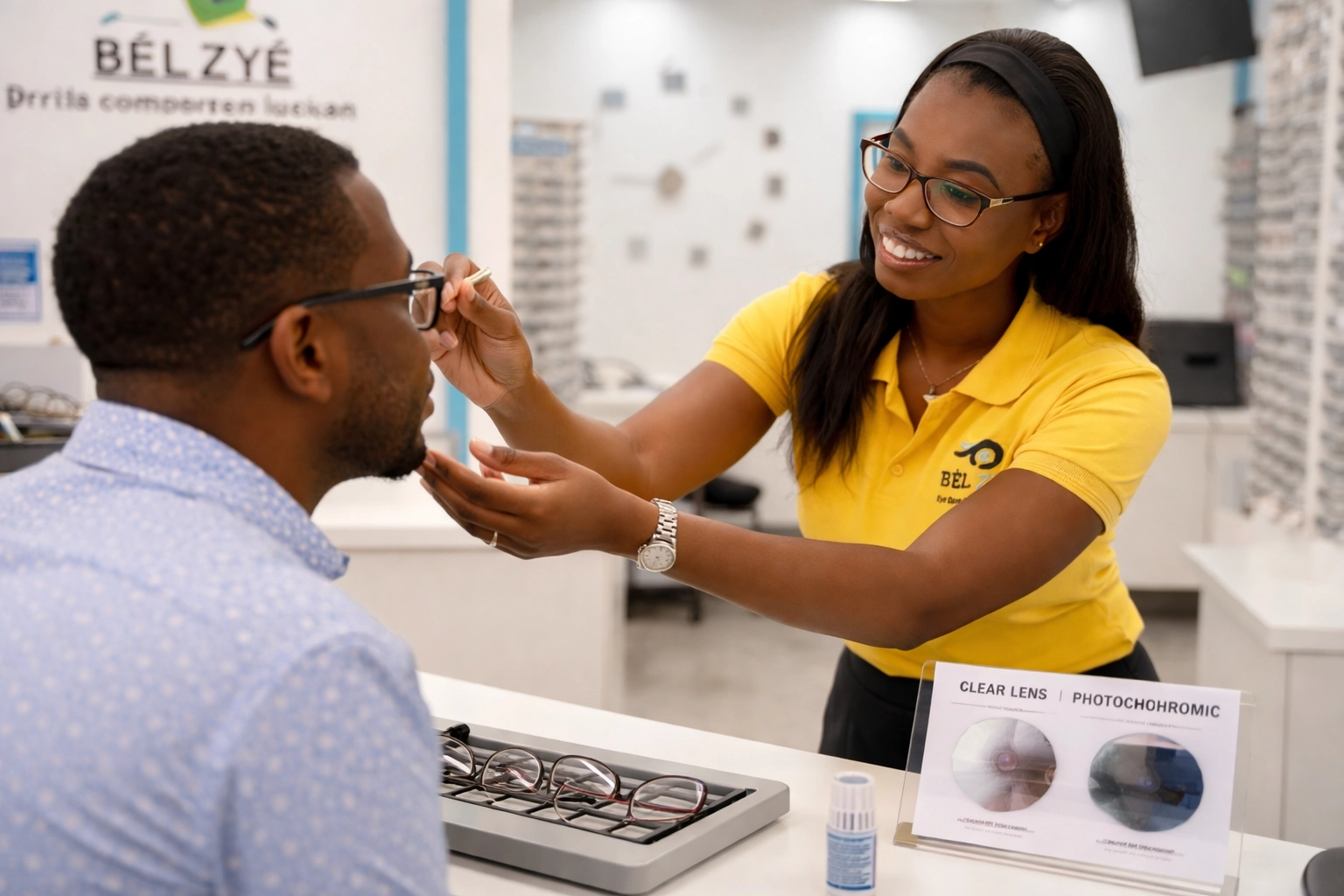
Transitions® is a specific brand of photochromic lenses, and it's the most well-known one in the world. All Transitions® lenses are photochromic, but not all photochromic lenses are Transitions®.
What makes them different?
Transitions® uses proprietary technology that sets them apart from generic options. They use either an "imbibing" process, which draws photochromic dye below the lens surface using heat, or Trans-Bonding™ technology that places the dye on the surface for enhanced performance.
Why it matters:
This advanced technology translates to real-world benefits you'll actually notice. Faster darkening. Faster clearing. Better performance in different lighting conditions. We'll get into the specifics below.
What's the real difference between the two?
Here's the honest truth: both photochromic and Transitions® lenses will darken in the sun and clear up indoors. Both protect your eyes from harmful UV rays.
But the quality of that experience? That's where things get interesting.
Think of it like comparing a basic smartphone to a flagship model. Both make calls and send texts. But the premium option does everything faster, smoother, and with more features.
Let's look at the key differences:
How fast do they change?
What's involved?
Speed is one of the biggest factors that separates Transitions® from generic photochromic lenses.
Transitions® Signature Gen 8 starts darkening within seconds of UV exposure
Generic photochromic lenses typically take a couple of minutes to fully darken
When you head indoors, Transitions® Signature Gen 8 clears up to 35% faster than standard photochromic lenses
The newest Transitions® technology returns to clear up to 3 minutes faster than previous generations
Why it matters:
Imagine walking from the blazing Rodney Bay sunshine into an air-conditioned shop. With slower lenses, you're standing there squinting at products while waiting for your lenses to catch up. With faster-responding lenses, you're back to clear vision almost immediately.
In our tropical climate, where you're constantly moving between bright outdoor spaces and shaded interiors, those extra minutes add up.
How dark do they get?
What's involved?
Not all light-adaptive lenses reach the same level of darkness. Transitions® lenses are designed to get darker and provide more comfortable vision in intense sunlight.
Some specialty options like Transitions® XTRActive even retain a slight tint indoors. This helps reduce glare from harsh artificial lighting, perfect if you spend time under bright office lights or fluorescent fixtures.
Why it matters:
Saint Lucia's sunshine isn't subtle. You need lenses that can actually keep up with the intensity. Generic photochromic lenses might leave you still squinting on particularly bright days, while premium options provide deeper, more comfortable tinting.
Do they work in the car?
What's involved?
Here's something many people don't realize: most standard photochromic lenses don't darken well inside vehicles.
Why? Because modern car windshields already block most UV rays. Since photochromic technology relies on UV exposure to trigger the darkening, your lenses stay mostly clear while you're driving, even in blinding sunlight.
Transitions® XTRActive is specifically designed to address this. These lenses darken behind the windshield, giving you sun protection while driving.
Why it matters:
If you spend time driving around the island, whether it's your daily commute through Castries or weekend trips down to Soufrière, this could be a deal-breaker. Standard photochromic lenses won't help much, but the right Transitions® option will.
What about style and colour options?
What's involved?
Generic photochromic lenses typically come in one or two standard tint colours, usually grey or brown.
Transitions® offers significantly more variety:
Classic options like grey, brown, and graphite green
Fashion-forward colours like sapphire and amber
Specialty products like Transitions® Vantage with variable polarization
Why it matters:
Your glasses are part of your personal style. Having more colour options means you can match your lenses to your frames, your wardrobe, or simply your mood.
Which option is right for you?
Questions to ask yourself:
Before making a decision, consider your daily routine and priorities:

The bottom line
Generic photochromic lenses are a solid, budget-friendly choice if:
You want basic light-adaptive convenience
Slower transition speeds don't frustrate you
You don't need your lenses to work while driving
You're prioritizing affordability
Transitions® lenses are worth the investment if:
You want the fastest, most responsive technology
You spend significant time driving
You prefer more colour and style options
You want premium durability and anti-scratch protection
You live somewhere with intense sunshine (hello, Saint Lucia!)
Ready to see the difference for yourself?
The best way to choose? Try them on. See how they perform. Ask questions.
At Bèl Zyé Eye Care, we're happy to walk you through all your lens options: whether you're looking for generic photochromic, Transitions® Signature Gen 8, Transitions® XTRActive, or something else entirely.
With two convenient locations in Castries and Rodney Bay, plus advanced diagnostic technology to ensure your prescription is spot-on, we'll help you find the perfect solution for your eyes and your lifestyle.
Book your eye exam with one of our optometrists today: and let's find lenses that actually keep up with the Saint Lucian sunshine. ☀️
Comments